Academic Publishing Support

Specialist Publishing Support for Egyptology, Archaeology, and Heritage

Publishing in the fields of Egyptology, archaeology and heritage can present multiple challenges. Manuscripts often contain complex data tables, object catalogues, specialist transliterations and archival imagery that require more than just standard layout skills. They require someone who understands the subject matter as well as the technical requirements of print and digital media.

With a BA and Postgraduate Diploma in Egyptology and over two decades of administrative experience – including my recent role as Publications Manager at the Egypt Exploration Society (2023–2026) – I offer academic publishers a rare blend of subject-matter expertise and rigorous production management.

I provide end-to-end support for academic titles, handling everything from manuscript liaison to final printer proofs. Whether you need a book typeset with ancient texts, archival photos cleaned up, or a complex project managed from submission to distribution, I ensure your publications are handled with precision and care.

Get in touch

Core services
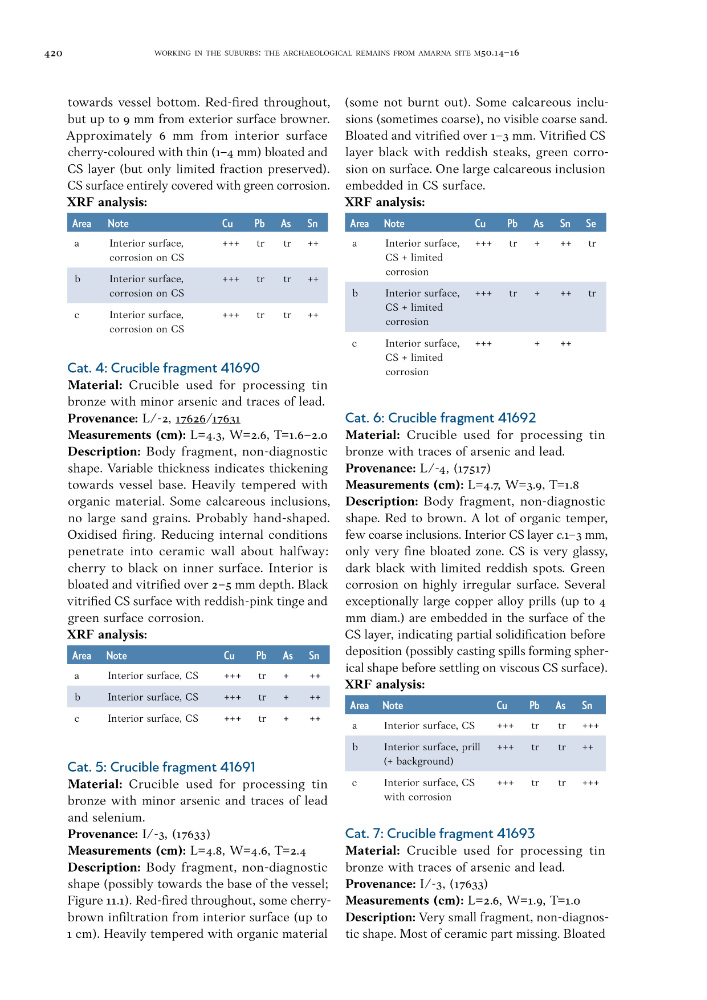
Page 420 from Hodgkinson 'Working in the Suburbs' book showing text and tables of data in two columns.

Book Typesetting & Layout

A book should be a work of art. Whilst poorly laid-out text distracts the reader, well-crafted pages allow the content to flow and become invisible, letting the research shine. I specialise in non-fiction titles, journals and articles, using industry-standard software (Adobe InDesign CC or Affinity Studio) to produce beautiful, readable layouts.

  • Complex Data: Formatting multi-column text, extensive data tables, object catalogues, and indexes.
  • Full Production: From importing styles and setting up templates to exporting authors’ proofs and print-ready files.
  • Specialist Content: Expert handling of Egyptian transliteration, hieroglyphic and Coptic texts using specialist fonts.
  • Collaboration: Leave me to liaise with your authors and printers regarding queries and PDF proofs.

Specialist Image Editing

High-quality images are critical for heritage publications, yet they often arrive in varying states of repair, from digital RAW files to scans of Victorian watercolours or glass plates. I edit photos to make them stand out in print and online, whilst adhering to a strict ethical code, ensuring the original content remains intact. I do not use AI to alter images. 
  • Artefact Photography: Background removal, colour correction, and optimisation for print or web use.
  • Archival Restoration: Processing scans from film, negatives, or glass plates; correcting exposure, dust and colour casts.
  • Documentary Editing: Enhancing photos of excavations, teams at work and heritage sites.
  • Papyri Reconstruction: Digital repair and reassembly of fragmented papyri where physical conservation isn’t possible.
  • Metadata: Adding accession numbers and provenance information directly to file metadata.
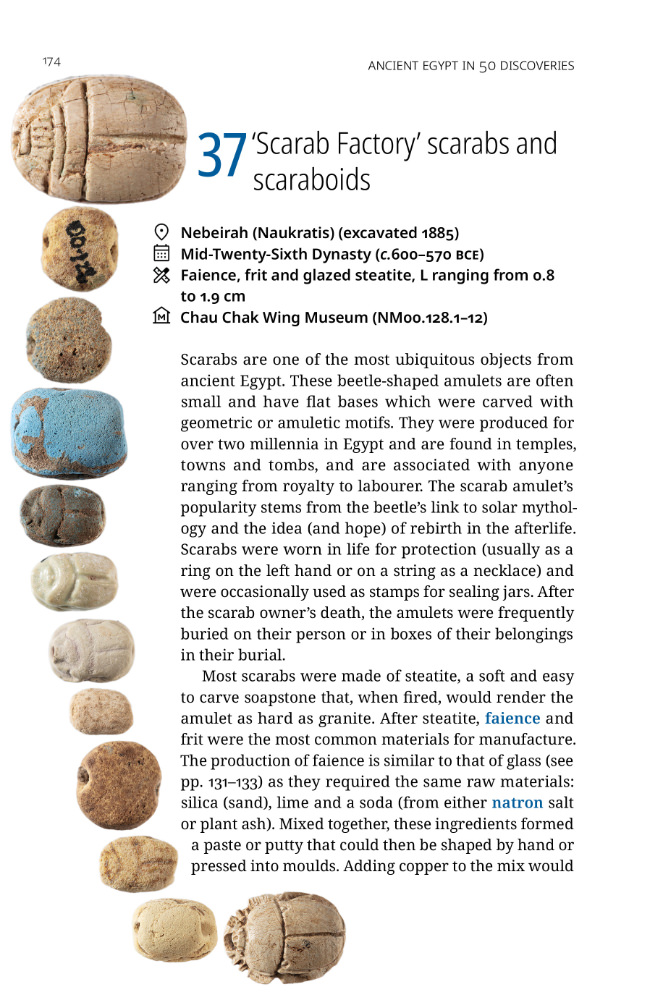
Page 174 from Ancient Egypt in 50 Discoveries, detailing a number of scarabs found at a scarab factory. There is a row of scarabs running down the side of the page.
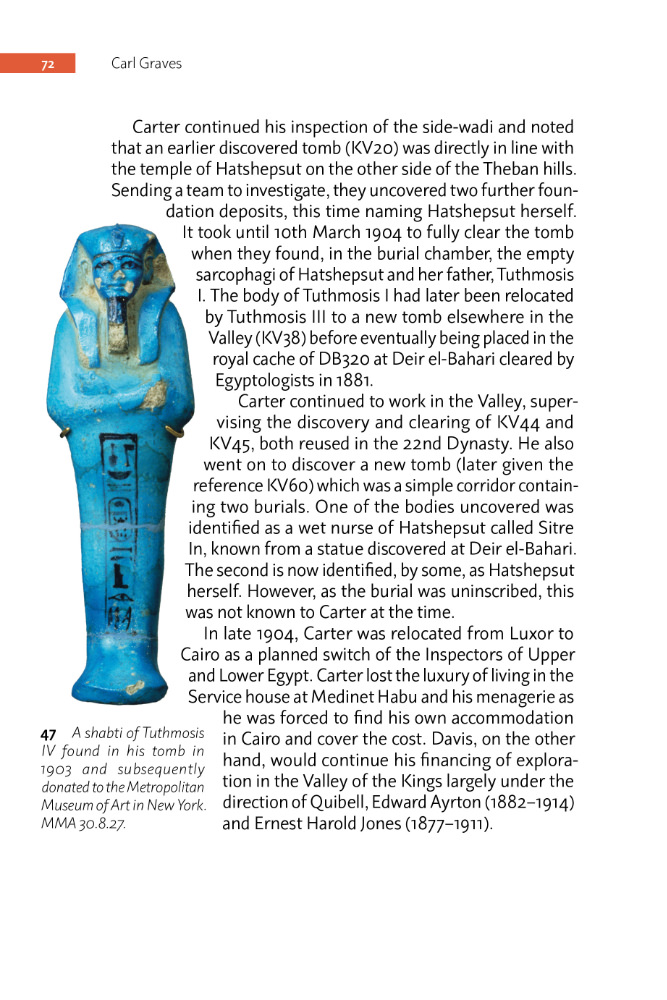
Page 72 from 'Howard Carter: From Tracer to Tutankhamun'. The page is mostly text with a photo of a faience shabti at the side with the text running around the edge of the shabti.

Project Management

Publishing is a collaborative process involving authors, reviewers, copy-editors, proofreaders, printers and distributors. My background in a wide range of administrative roles – from the National Probation Service to trade union work – has honed my ability to liaise professionally with all stakeholders while adhering to strict deadlines and organisational procedures.

  • Workflow Coordination: Managing manuscript submissions, copy-editor comments and PDF proof rounds.
  • Quality Control: Checking printers’ proofs and ensuring final output matches specifications.
  • Stakeholder Liaison: Acting as the central point of contact to keep projects moving smoothly and calmly, even under tight deadlines.

Prices

Typesetting is charged on a per-page basis, and all other work on an hourly basis. If you need me to both project manage/edit images and typeset, I will charge the typesetting per page and all other work hourly:

Typesetting

  • Larger trim sizes (c. A4): £10–£13 per page (depending on complexity, e.g., tables, specialist fonts).
  • Smaller trim sizes (c. A5): £5–£8 per page (depending on complexity, e.g., tables, specialist fonts).
  • Amendments: £30 per hour for amendments requested after the initial typeset.

Image editing and project management

  • Hourly Rate: £30 per hour.

Note: A 20% deposit may be required at the onset of projects. Discounts may be available for charities and small presses. No-obligation estimates are available.

Frequently Asked Questions

You can send me your photos in any standard format, such as JPG, PNG, RAW, Photoshop or TIFF. I prefer to work with RAW files or TIFFs if you have them, because they’re more flexible when it comes to processing capabilities. However, I can work with whatever you’ve got.

Typesetting files should be sent as Windows-compatible wordprocessing files (Word, LibreOffice etc.). Please send images in a separate folder rather than embedded in the manuscript, marking their intended placement in the text.

Due to file size limits on email, please use a file transfer service like SwissTransfer (50GB limit) or WeTransfer (2GB limit on free accounts), or send me a link to a shared drive, such as Dropbox, Google Drive or OneDrive.

No. Typesetting and image editing are very different skillsets from copy-editing and proofreading. However, if you need recommendations for suitable professionals in these areas, I am happy to provide suggestions.

Absolutely. I do not claim any rights to your photos or your writing. I only ask for permission to share examples of my work (credited to you) on my website or social media on occasion.

I can return the typeset book either as a print-ready PDF, a set of packaged InDesign files, or both.

It’s up to you how you want your photos returned. I can save them in the same format you sent them (or PNG for transparent backgrounds), or I can create multiple versions, such as a TIFF and a JPG, for you. I won’t, however, send my working files.

This depends on the length and complexity of the project (e.g., data tables and specialist fonts take longer) and my current schedule. We can discuss specific deadlines and timelines during our initial consultation.

Yes, I have experience working with digitised files from many sources. While I cannot fix severe blur or focus issues, I can often improve exposure and colour casts, straighten composition, and clean up dust or scratches.

What clients say

  • Julia has worked on several Egyptological volumes for the Egypt Exploration Society over more than a decade and, over that time, has revolutionised the look, feel, and accessibility of our whole portfolio. As well as a flexible and adaptable typesetter, Julia has gone above and beyond to work with copyeditors, reviewers, designers, and illustrators to bring new life to our monographs. We look forward to continuing our work with Julia in the future and seeing what ‘wonderful things’ she produces for us.
    Carl Graves
  • As part of my research at the British Museum into the small finds recovered by Flinders Petrie from the site of Tell Nabasha in 1888, I needed to photograph roughly 300 objects for publication. While I took the photos myself, they were rather rough and also impacted by the lighting conditions in the Study Room (not the greatest). As such, I contacted Julia and asked her to edit the object photographs, remove their background and replace it with a white background so they could be more easily grouped in plates. Julia worked very quickly and the results are absolutely excellent. She set up a dedicated cloud drive for the images which meant I could essentially get to the images in real time as they were being edited and build up the plates. It was an excellent experience and some beautiful results!
    Dr Nicky Nielsen
    Lecturer in Egyptology, University of Manchester

View My Work

I have compiled a selection of books I’ve typeset and project managed into a PDF, showcasing layouts, specialist fonts and image integration. Please feel free to view or download (it’s a 50MB file, so you may need to give it a moment to load):

If you would like to find out a little more about artefact photography and image processing, have a read of some of my artefact photography articles:

Next Steps

If you have a project in mind, whether it’s a single article, a full monograph, or a batch of image editing, please get in touch. I can provide a no-obligation estimate and discuss how we can best work together to bring your publication to life.